Meat is big news amongst foodies these days. It is conceptualised as alternatively a luxury item and a problem. Although pork is the most widely consumed meat in China (followed by chicken), beef has been gaining in popularity. The increases in overall meat consumption by the Chinese have cause some food scholars and activist to raise the alarm because of the potential impacts this will have with regard to diet related public health and on the environment. In this post, I want to argue that the diet related concerns need a closer investigation that pays attention not just to the volume of beef consumed but also the ways that meat is being incorporated into the diet of many Chinese. Continue reading
Tag Archives: food
Five food problems that people in the US, Europe and China could work on together
There is no doubt that food is a big issue and something that has exploded in the public consciousness in the Global West. Cities now have food strategies aimed at improving access to healthy food and there are moral panics, and maybe real panics, over the production of obesogenic environments that contribute to rises in diabetes, bowl cancer and heart disease and are largely considered to be caused by a food system that is supermarketized. Then there are the food scares and food scandals from BSE to Horse meat that plague Europe. At the same time, discussions regarding China’s food problems regularly pop up in the news; be they the problem of zoonotic diseases that threaten to turn into global pandemics, anxiety over how China will feed itself, distress over how China is taking over American food producers (e.g., Smithfield) to satisfy its own meat desire just as China’s products are invading American supermarket shelves, or assertions about the lack of integrity of Chinese food producers. What strikes me is that instead of constructing an Orientalist discourse around food issues of the west and the rest, West and East might come together to learn from each other and seek solutions. Here are just five food related problems that I think would benefit from just such a joined up approach.
Street food, everyday life, and patterns of inequality

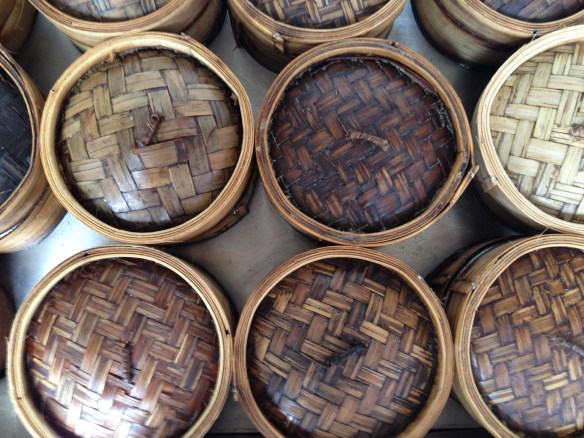
Dim Sum. Photo taken at street food vendor in Mong Konk.
This photo is of steamer baskets containing dim sum. Dim sum are roughly translated as little bites, and can be savoury or sweet. My favorites are Char Sui Bao, Shu Mai, and Jin Dui. Char Sui Bao are white buns filled with bar-b-que pork. Shu Mai look like a large thimble or very small basket out of some sort of yellow dough and filled with either shrimp or pork filling. Continue reading
Integrity, Honesty and Orientalist Food Discourse
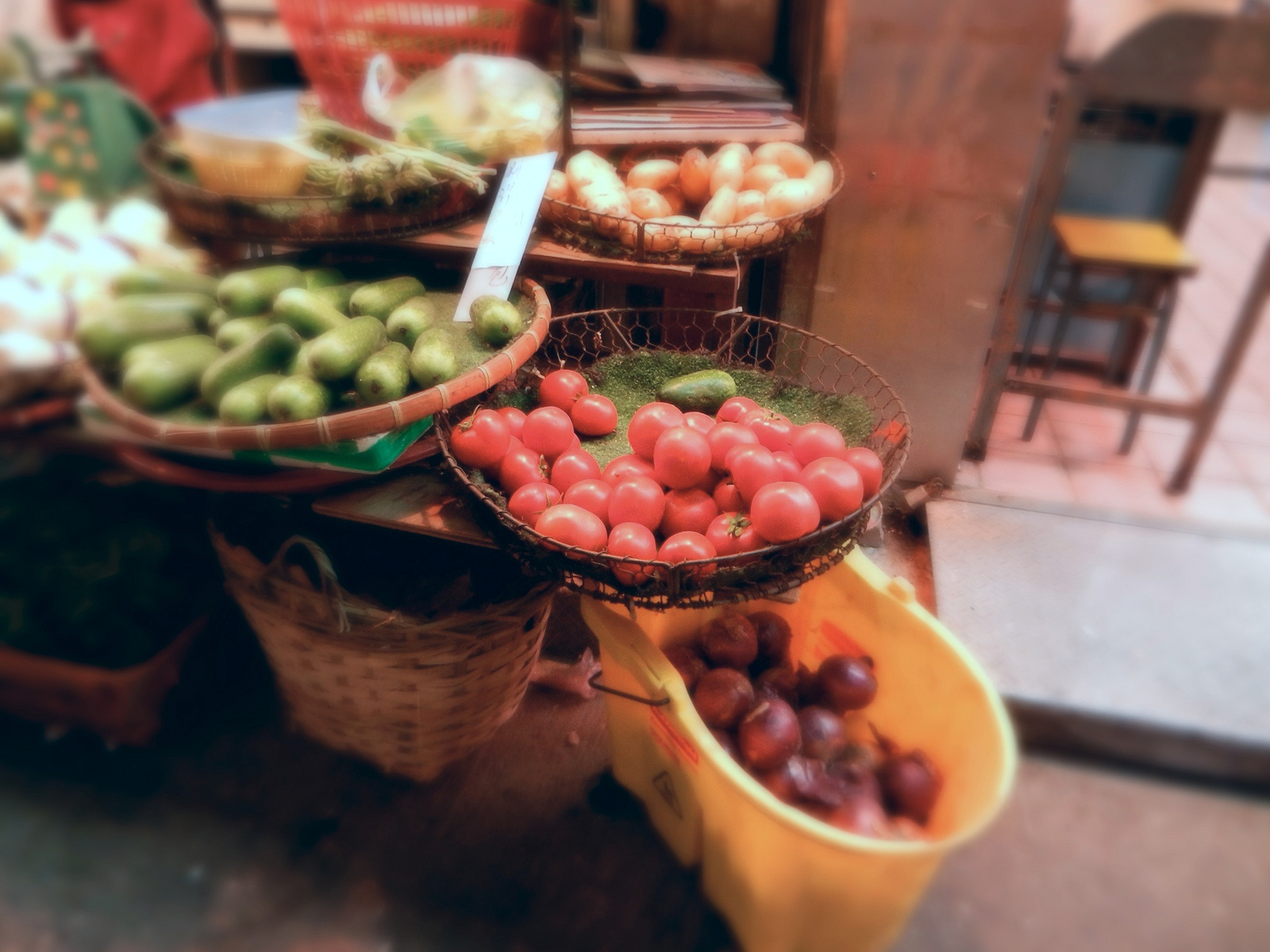
“Yes, getting people to eat healthy vegetables and fruits and other products from wet markets is important; but the sanitation side is complex and you face all the horrors of these markets coming from China. … But so much about these wet markets depends on what is grown and how and where. In Europe and the US where the movement toward markets is huge but with high sanitation controls and with farmers with some honesty, it is simple.”
I was recently having an email discussion with an American food scholar, who has written quite a bit on the nutrition transition. He was offering advice and sending helpful information and was broadly sympathetic to my argument about the importance of maintaining the wet markets. However, as you can see from the quote above, there are some real stumbling blocks of the discursive kind that bear further discussion and consideration. I was troubled by these words for a couple of reasons particularly. Continue reading


You must be logged in to post a comment.