
I strive to make a positive impact through my work, as many academics do. I also support colleagues to develop their own impact and am often asked by organisations to comment on their plans for creating change.
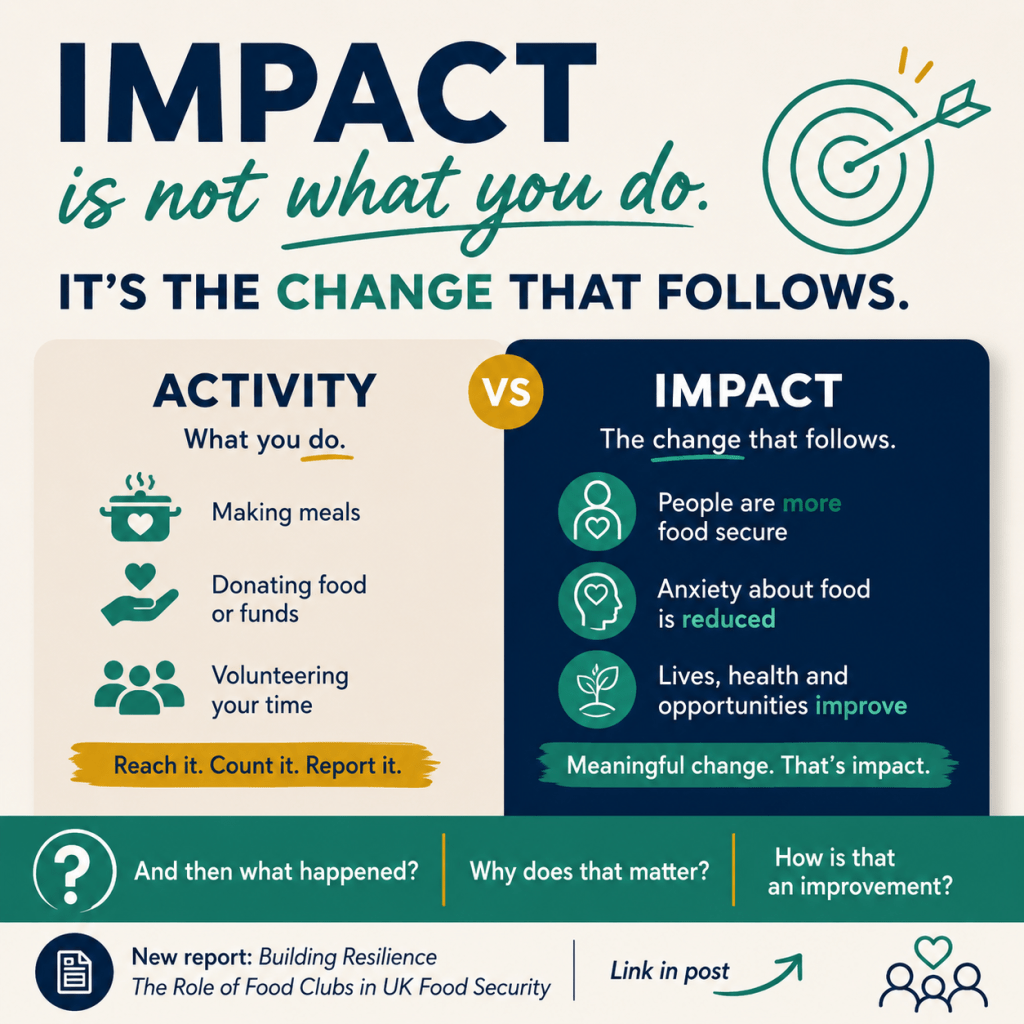
So often people think #Impact is what they did—making meals, donating #food or funds, volunteering. They then measure the significance of that activity in terms of its reach: millions of meals served, pounds donated, or volunteer hours.
But that’s not impact.
That’s activity.
The real questions are:
➡️ And then what happened?
➡️ Why does that matter?
➡️ How is the world better because of it?
If the answers to those questions are not compelling, then it may be time to rethink what you’re doing—and how you’re doing it.
This is why, in our recent report on food clubs, we didn’t just ask how many people attended or how much food was distributed. We asked whether food clubs helped people become more food secure, whether they improved diets, reduced anxiety about food, strengthened cooking confidence, and reduced reliance on emergency food support.
Those are the outcomes that matter because they tell us something about whether people’s lives are actually improving.
Measuring activity is important. But measuring impact means asking whether that activity has created meaningful change for the people and communities it was intended to benefit.
I’d be interested to hear: What’s the best example you’ve seen of an organisation moving beyond measuring activity to demonstrating real impact?
 GeoFoodie
You must be logged in to post a comment.