I recently participated in a Fuse Research Event, giving the Keynote presentation on the importance of transitioning our food system and how the Food Ladders framework can support this. My talk starts at about 25 minutes into the recording.
FUSE half-day seminar
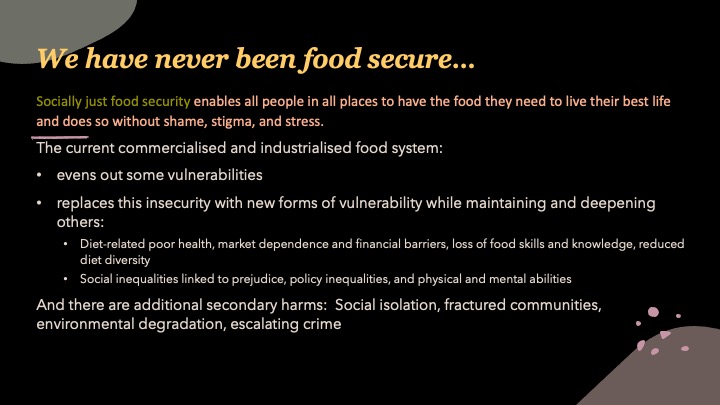
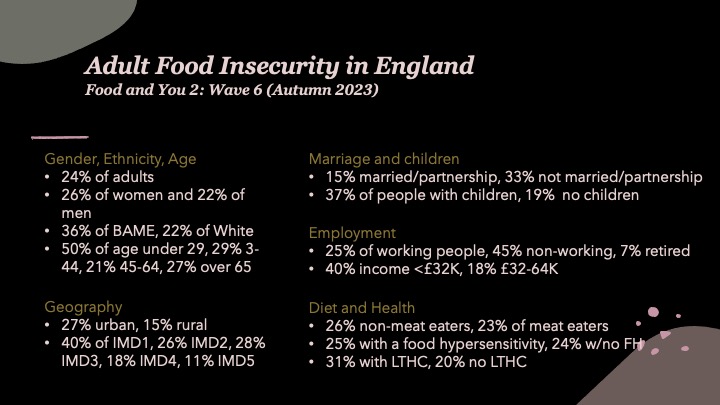
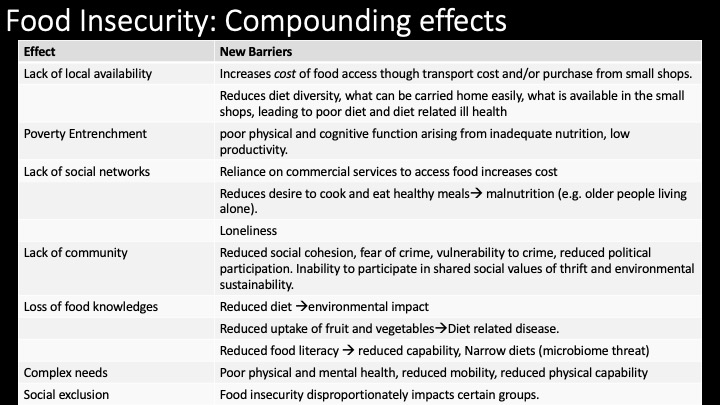
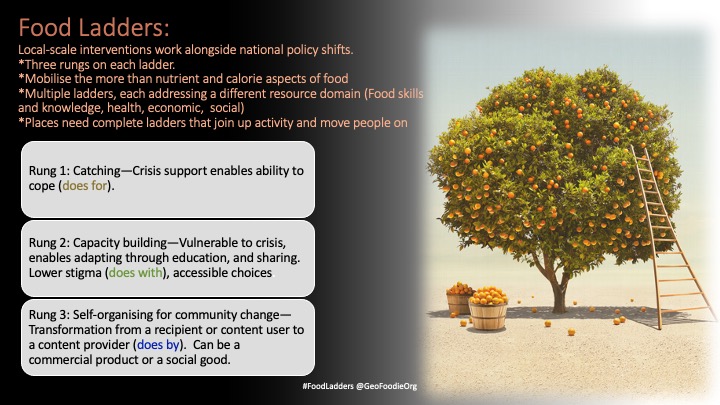
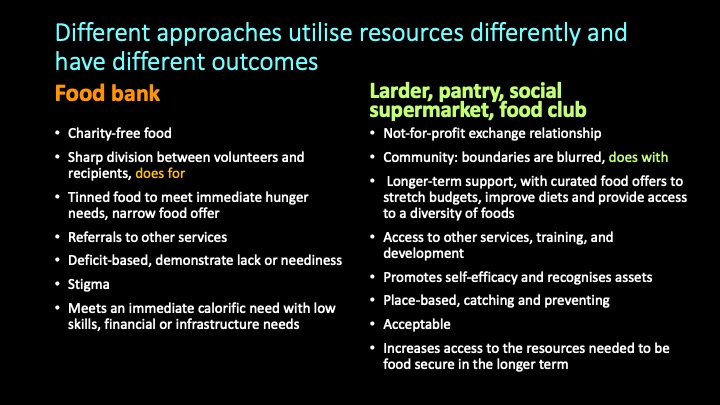
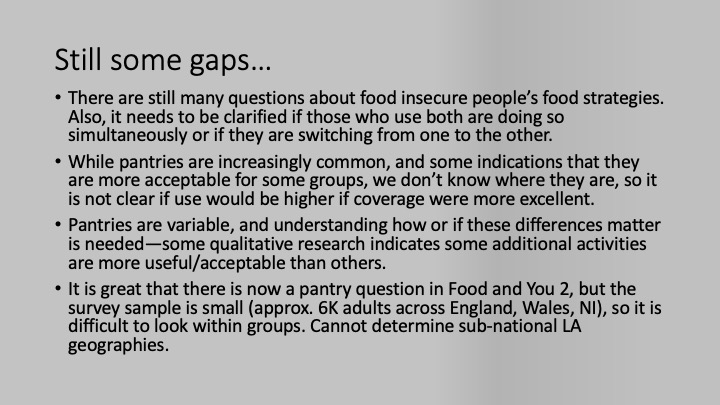
I discussed the current food insecurity situation, drawing on the Autumn 2022 Food and You 2 data. This data is published by the Food Standards Agency and is an official set of government statistics. I talked about how we have never had full food security and the reasons for this. I then introduced the Food Ladders framework and provided some comparisons between different approaches. I showed the statistics for food bank use versus pantry/food club/social supermarket use, as well as the details about national understanding. I concluded with some gaps in understanding that still need to be addressed. The final slide provides relevant links to other works I have produced on this topic.
In addition to my talk, others provided interesting research covering children, people with mental health issues, and what I would consider rung 2 interventions on the ladders. You can also see these presentations and download the slides from the links above.
I give a lot of talks and interviews about food security. Last week I gave 2; the week before, I gave one; and at the beginning of January, I gave another. I am grateful that people what to hear what I have to say and that it is, hopefully, helping in the fight to get people to listen to the issues that people are facing around food security.
Food insecurity exists in wealthy economies where there is enough food to feed everyone, but it is not available to everyone. Food insecurity is not just something that people somewhere else experience, be they in war-torn or poor countries or places where there has been a disaster. I am not trying to diminish the experience and trouble people in these “other” places face. Indeed, their trouble is awful.
But food insecurity is experienced in bellies and in minds and in bodies. It is personal. Food Security becomes geographical when multiple people from the same place are similarly impacted.
Saying that support should go to the “most needy” creates an insidious competition. To get help, you have to prove you fit into this category. Many people don’t see themselves that way–there are always others we can point to who are worse off. Many don’t want to participate in that competition because of the stigma of failure surrounding it–you win but lose simultaneously.
Some who provide help get worried that they are not reaching the “most needy” and create all sorts of barriers and demands for proof. The logic is that if we give this thing to you and someone needier comes along, we won’t have any for them. At the same time, there are worries about “foodbank tourism”, where people go from location to location to get help. They have “won” the race to the bottom and are using this success as a survival strategy. And then are stigmatised and denied because they have successfully proved their need. Note that success here is encouraged and created by those most worried that the “most needy” won’t get what they need. In the meantime, people don’t get the help they need. Some of whom may indeed be the neediest.
This competition is also something that involves judges and competitors. You cannot be both, but you can undoubtedly become one or the other if your circumstances change. But who are we to judge? Food insecurity is experienced individually.
So what do I propose? Let’s stop with the competition. Mutual support recognises that giving and receiving help is not a competition and that everyone can participate equally and in multiple roles.
If you are interested in hearing more. The talk I gve in early January to Gather Movement is here:
The interview was included in a BBC radio 4 broadcast as part of the Inside Health programme. The interview is available here:
The radio show is really well done. It highlights the advantages of pantries. The women interviewed highlight the stress and anxiety of food insecurity, but also the belief that projects are not for them. Pantries, and now some food banks, provide fruit and veg, bringing in additional support to help people move on from their food services. People are also introduced to new food. These women also demonstrate just how capable they are. These women are not failures. They have strategies and capabilities. They want to feed their families well and can do so.
The data I discuss–and more analysis–is provided in this report I wrote. You can download and read the report here. It also provides some further detail about different forms of support.
In early January, I gave a talk to Gather Movement about food security in the UK and how to embed asset-based approaches into food support for communities. Asset-based approaches (or Asset Based Community Development–ABCD) focus on and develop the resources (or assets) that are already within a community before going out to secure additional resources that might be needed to achieve outcomes desired by the community.
Gather Movement is a collection of charities and churches aiming to achieve transformation in thier communities.
After the presentation, there were reflections from food security experts, including Dr Dianna Smith from Southampton University and Danni Malone from the Trussell Trust.







 GeoFoodie
You must be logged in to post a comment.