Link

The following link is to a paper I wrote for a special issue of Europe Now that focused on Waste.  Original available here: https://www.europenowjournal.org/2019/05/06/the-multiple-ontologies-of-surplus-food/

This paper draws from Mol’s work, and particularly her work on health. And Ontology is the theory of what is real. Because what is real comes before human understanding and sits outside language, humans we can never fully know or describe what is real. Instead we have theories about what it might (ontologies) be and how we can know it (epistemologies).

These theories are based on a metric of good enoughness. Do they work? All sciences are underpinned by this. Knowledge itself is a human construction, although what we seek to know sits beyond that. Understanding different views creates a whole that is rooted in time and place–an ephemeral reality.

Why does this matter? Well, wen we understand this and that what is real in a given time and place, we can seek to und we stand the qualities of a thing that can be called into existence when we shift the configuration. It’s like alchemy. What was in one circumstance waste material can in another configuration become something that produces value.

Another metaphor for this might be the kaleidoscope, where shifting the elements, foregrounding some, changing the juxtapositions changes what we see and what it is.
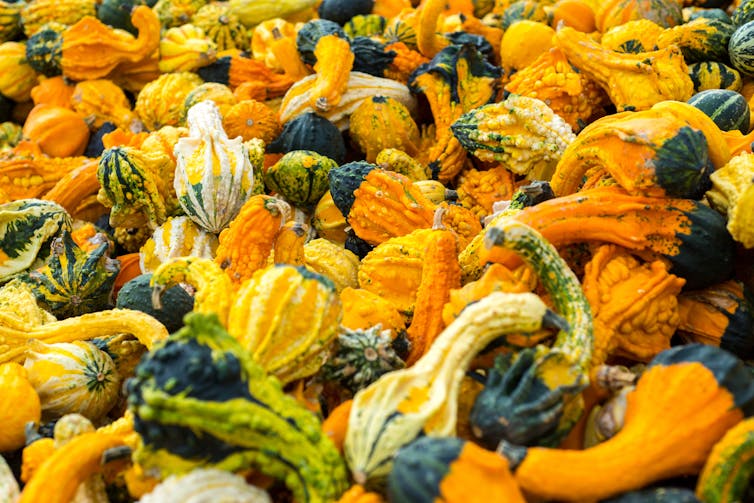
Food Waste, Wasted Food, Surplus Food

Video

Have you ever wondered what we mean by surplus food?  Where does it come from and how does it link to the problem of food waste?  This short slide show video provides a brief overview.  Continue reading

Reblogged from the Conversation: Capitalism has coopted the language of food-Costing the world millions of meals.

Capitalism has coopted the language of food – costing the world millions of meals

File 20180201 123852 ap84hl.jpg?ixlib=rb 1.1
SABPICS/Shutterstock.com

Megan Blake, University of Sheffield

Hardly a day goes by when food is not in the news. We are at once encouraged to eat Continue reading

Why SURPLUS food is important for feeding vulnerable people

There have been a number of arguments in the press and on social media arguing that the use of surplus food to feed food insecure people is at best only a short-term solution and at worst harmful (e.g., Caraher 2017).  I would agree that the hunger that is caused by poverty is not only not being addressed by the UK government (see Blake 2015, and a more recent update of the article published by GMPA) but in some cases is being enhanced by current government policy (e.g., a benefits system that has built in delays, draconian sanctions, programme cuts that impact on the most vulnerable). In reading the argument, however, a number of issues stand out as needing further clarification and interrogation.  Firstly, there is a lack of understanding about food surplus in terms of what it is.  Secondly, there is misconception about how food surplus becomes food for bellies as it travels through the charity sector. Thirdly, there is an overly narrow understanding of the value of surplus food both for charities and those whom they support. These issues are explored in this blog post. Continue reading