
I was invited to give a talk about food security and the food ladders framework to the FSA recently. The seminar was recorded.
Tag Archives: Food Ladders
Everyday food security: Place-making through community organising in the UK
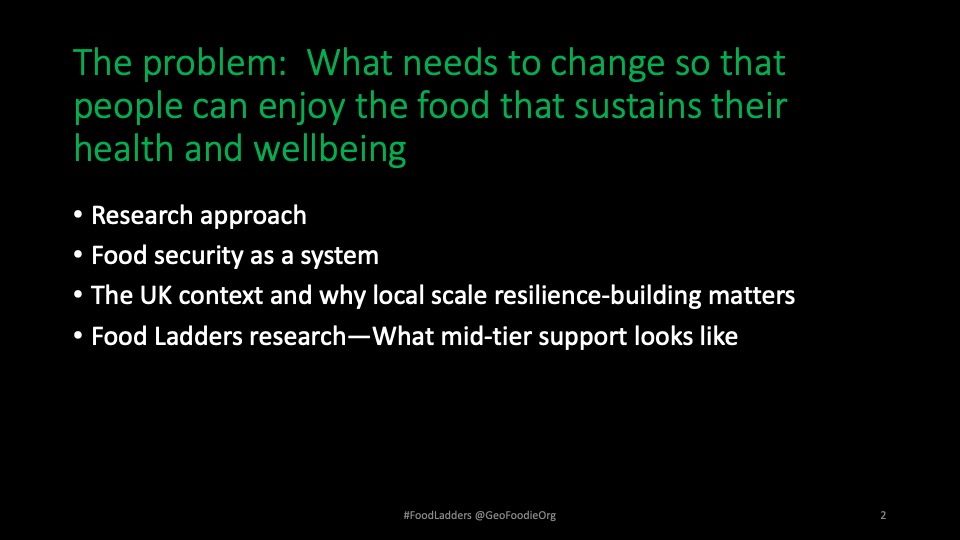
Earlier this week (14 June 2022), I participated in a conference as a keynote speaker on urban landscapes in transformation, hosted by SLU Urban Futures in Sweden. Unfortunately, I had to attend virtually because of airline disruptions. It was a really interesting conference with excellent research focusing on how we might make more inclusive and sustainable foodscapes for all. This is the presentation I gave at the conference. Thank you for inviting me to participate.






Please get in touch if you would like to know more about this research.
GODAN seminar on Food Insecurity and Food Ladders as a way repair communities.
In June I gave a webinar to an international audience who are part of the Global Open DAta Network (GODAN). GODAN’s mission is to harness data to eradicate hunger and malnutrition across the globe.
The talk is in three parts.
In the first segment I outline the four dimensions of food security as defined by the UN FAO include affordability, access, utilisation and consistency over time. The FAO argue that all four pillars must be in place for a household to be food secure. While the lack of affordability is well recognised as a cause of food insecurity in wealthy countries, other dimensions are often overlooked. Furthermore, some groups are more likely to experience greater vulnerability across these four pillars compared to others.
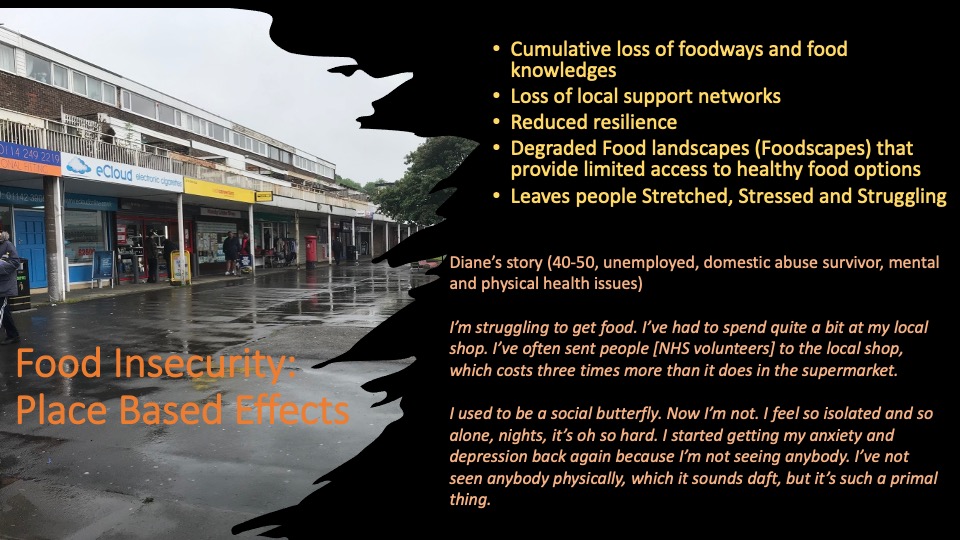
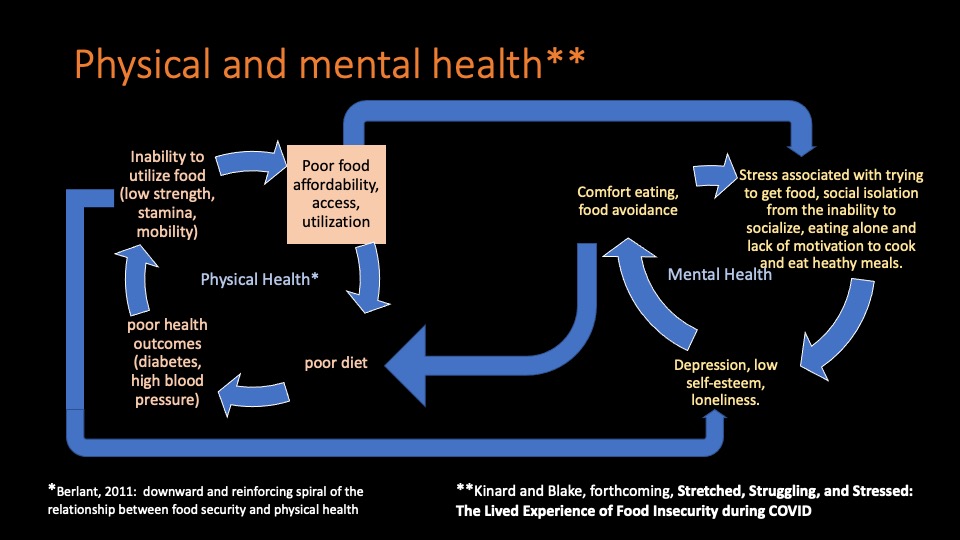
In the second segment I look at the effects of food insecurity on individuals and households. These effects sediment into landscapes. Moreover, these effects reinforce and amply the problems that give rise to food insecurity in the first place.
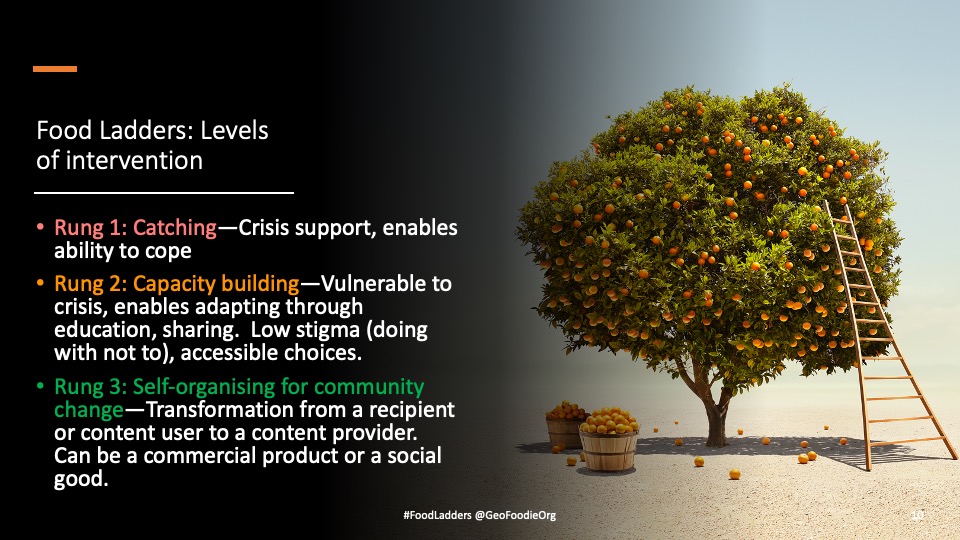
In the final segment I talk about my Food Ladders framework. Food Ladders is an evidence-based framework that helps to structure local responses to food insecurity and repair its effects through targeted interventions that catch those who need it most, build the capacity of those who are able, and facilitate transformation in ways that support all of four food security pillars.
You can watch the video here:
Making a national food service
This summer I spoke at a webinar with Marsha Smith and Sharon Noonan-Gunning also presenting. The webinars were hosted by a group of people who are joining together to make a network of places and groups who are joining together to promote social eating in their communities. I spoke about my Food Ladders work. The whole series is available on this page https://www.nationalfoodservice.uk/lecture-videos but for ease, I have copied in the one where I am speaking below.


You must be logged in to post a comment.