GODAN seminar on Food Insecurity and Food Ladders as a way repair communities.

In June I gave a webinar to an international audience who are part of the Global Open DAta Network (GODAN). GODAN’s mission is to harness data to eradicate hunger and malnutrition across the globe.

The talk is in three parts.

In the first segment I outline the four dimensions of food security as defined by the UN FAO include affordability, access, utilisation and consistency over time. The FAO argue that all four pillars must be in place for a household to be food secure.  While the lack of affordability is well recognised as a cause of food insecurity in wealthy countries, other dimensions are often overlooked.  Furthermore, some groups are more likely to experience greater vulnerability across these four pillars compared to others. 

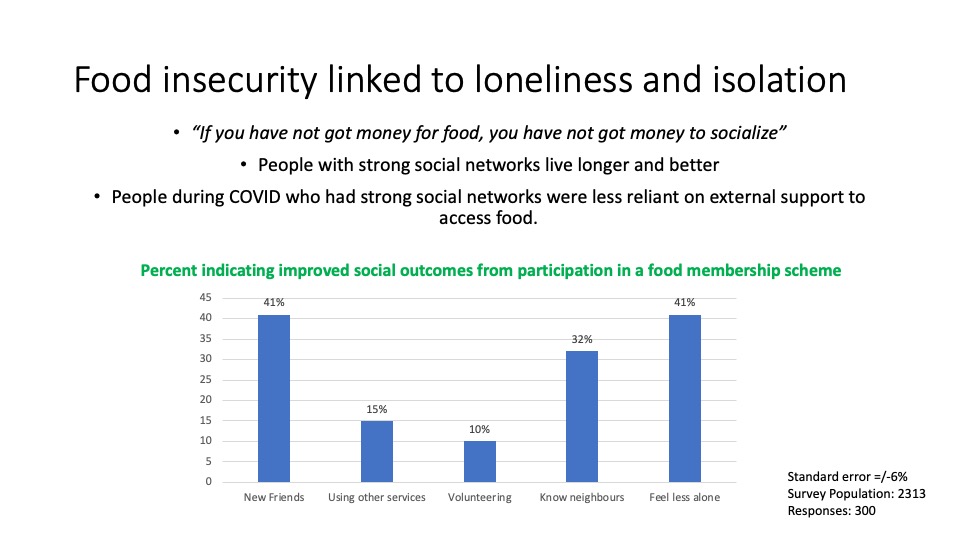
In the second segment I look at the effects of food insecurity on individuals and households. These effects sediment into landscapes.  Moreover, these effects reinforce and amply the problems that give rise to food insecurity in the first place.

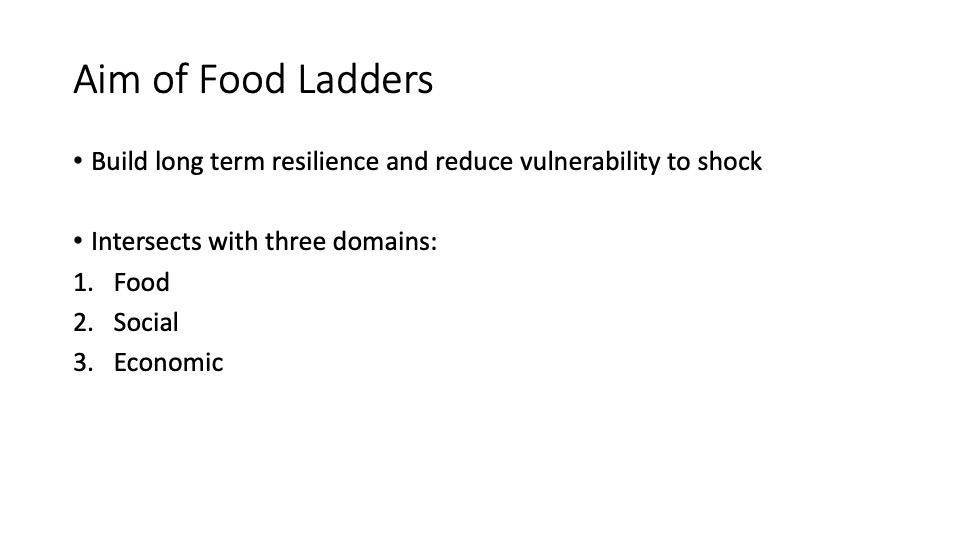
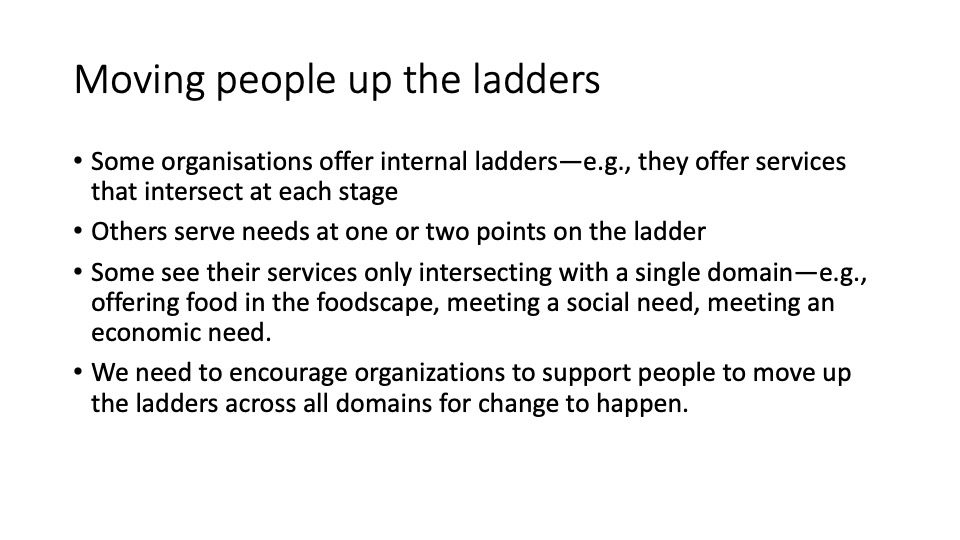
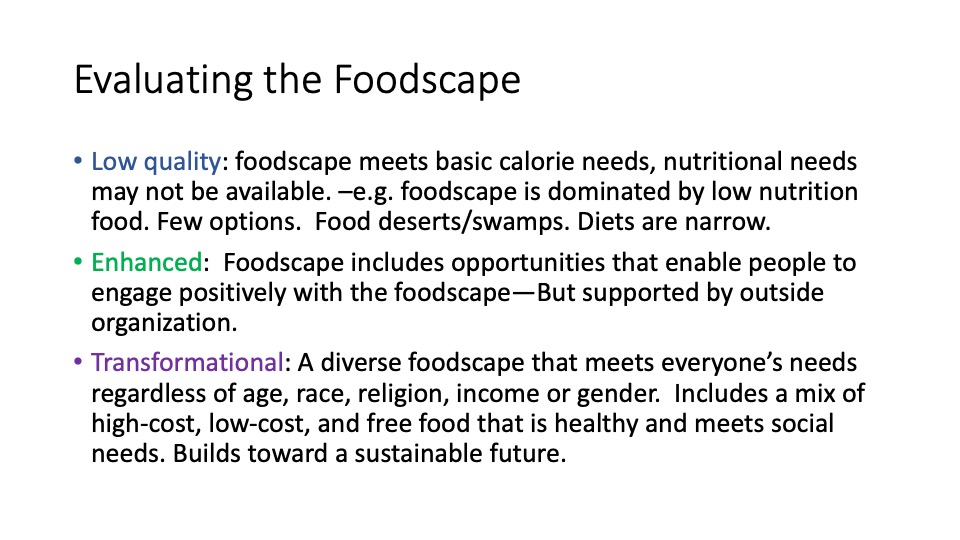
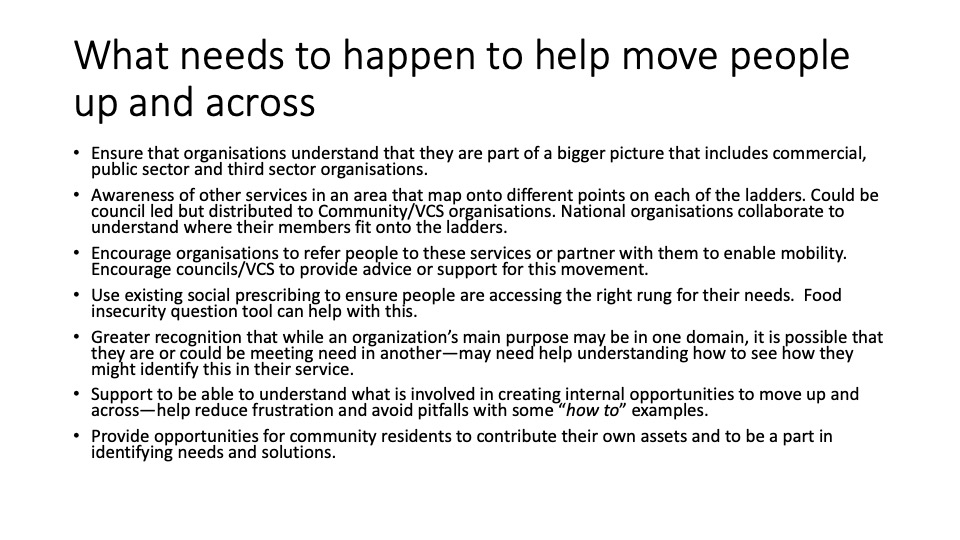
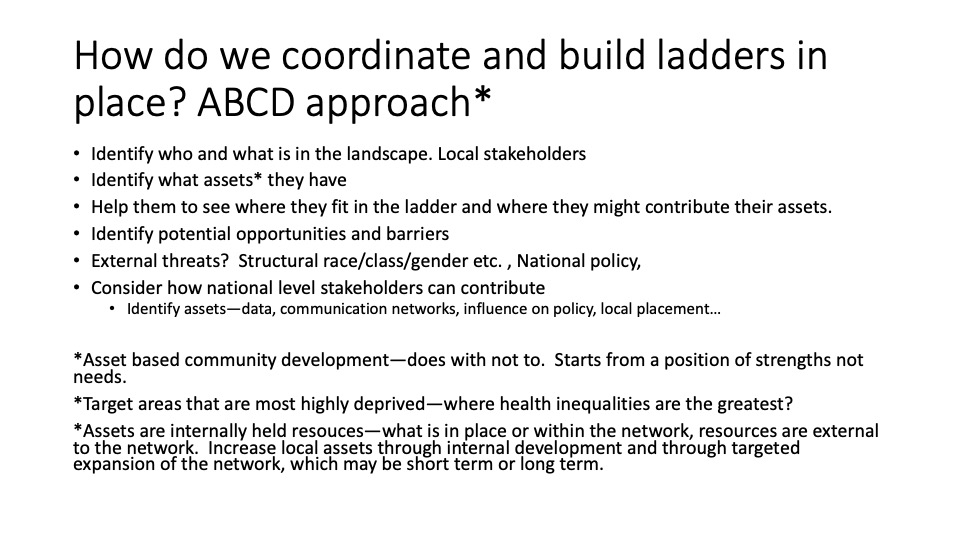
In the final segment I talk about my Food Ladders framework. Food Ladders is an evidence-based framework that helps to structure local responses to food insecurity and repair its effects through targeted interventions that catch those who need it most, build the capacity of those who are able, and facilitate transformation in ways that support all of four food security pillars.

You can watch the video here:

Megan Blake, GODAN Food Poverty webinar series

Behind hungry children there are hungry parents.

Behind hungry children are hungry parents. We know that typically parents feed their children before they feed themselves in the UK. We also know that households that are most likely to be food insecure tend to live in areas where others are also struggling. While enough money to purchase food is important, it isn’t enough. We need solutions that address the immediate need but also solutions that work toward a longer term, socially just resilience.

I was recently invited to participate in a webinar on children’s food insecurity. It was attended by more than 300 people from across industry, policy, community, health, and academic sectors. It was organised by Bernadette Moore and Charlotte Evans of the N8 Food Systems Policy Hub.

Using food systems to address children’s food insecurity.

Beanstalk Global Podcast for Healthy and Sustainable Food

Last week I participated in a webinar for a group of people who are concerned about healthy and sustainable food. The podcast focused on food insecurity. Participants in the webinar included Barbara Bray, Mark Driscoll and Jacqui Green, who have founded the group, as well as Tom Amery, MD of The Watercress Company and Ben Thomas, Environment Manager from Waitrose & Partners, and me.

You can watch the facebook live recording of the webinar below, but it was also broadcast live on Linked In and will be available from the Beanstalk Global web page soon. There is a bit of natter at the start of the broadcast which is not really related to the webinar, which starts at about 2 minutes in.

Webinar hosted on Beanstalk Global re: Food insecurity.

Elaborating Food Ladders

In this post I provide an elaboration of the Food Ladders framework. This elaboration provides greater detail in terms of how to identify activity and where it sits on the the ladders. There are three ladders in the Food Ladders approach: 1. Food access and nutritional value, 2. Social, and 3. Economic.