
Stakeholders are individuals or groups with a vested interest in, involved with, or impacted by a particular undertaking. This can range from a specific policy or service method to community-based projects or efforts to increase engagement in food systems. Engaging with stakeholders is essential for managing complexity and gaining support from those affected.
Tool 1: Stakeholder Mapping
| Tasks involved in stakeholder mapping: |
| 1. Identify all potential stakeholders –Make a long list and be as complete as possible. The level of detail with which you define each group will be determined by the project you are undertaking. |
| 2. Determine if they are internal or external. Internal stakeholders are those who are already part of your group or organisation. Include those who are necessary for the delivery of the project or planning you are undertaking. External stakeholders are those who are not (currently) directly involved in the implementation. These stakeholders may need to be involved indirectly. For example, they may need to be consulted as someone with experience of the problem or will be impacted by the change. |
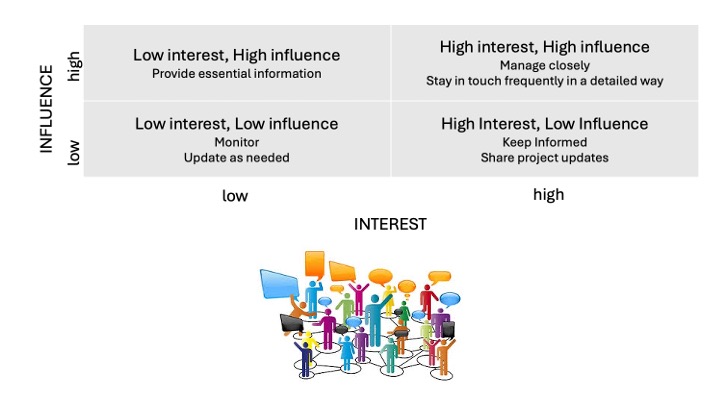
| 3. Using a mapping template to consider how to engage with your stakeholders. The mapping has two dimensions. Each dimension is typically classed as high or low, although you can add more. The first dimension is interest. Those with a high interest are people/groups who need to be directly involved in delivering the project or who will be directly impacted by it. The second dimension is influence. Those with high influence are people who can determine the success or failure of the project being delivered. This will result in 4 categories of groups (see table below). |
| 4. Develop a communication plan for each group, depending on which group they fall into. |
Further resources for stakeholder engagement
| REsource | Description |
|---|---|
| Tool 2: How to build an anchor network: Case studies from the West Midlands. | This guide from CLES, has tools for building an Anchor network. Anchor organisations have large-scale economic and other resources that can be mobilised to support local places. They include local authorities, housing associations, hospitals and universities. Bringing anchor organisations into a network can help mobilise their resources for a common purpose. Although the focus of this report concerns economic growth, food security is also a common purpose. Building sustainable and socially just food systems means bringing everyone to the table. This resource includes Case Studies from 5 areas in the West Midlands. |
| Tool 3: Stakeholder engagement and Steering groups | This resource from the Sustainable Food Places provides some guidance on creating local food partnerships. Crucially, it does not include community members themselves. To build to rung 3, community members should be involved. |
| Tool 4: Engaging community members | Community members may start out as having low interest in a project or developing a plan. Still, they can be affected deeply by the outcomes and may complain or not use the project once it is established because it does not meet their needs. Nurture Development, which provides resources and training(at a cost), suggests a way to engage community members to find a core group to represent the community more widely. |
| Tool 5: What is community engagement? | This guide, by Tractivity, provides a range of ways for engaging with community members to achieve meaningful relationships. It includes methods and examples as well as providing guidance on how to choose the most appropriate method. |
| Tool 6: Stakeholder Engagement 101 | This online course from Apolitical on stakeholder mapping and engagement is written for those in government and takes two hours. It is free and can be done at your own pace. You will need to subscribe, but membership is also free. They also provide templates for the stakeholder mapping and communication plan. |
 GeoFoodie
You must be logged in to post a comment.